One of the stitches I use a lot for geometric shapes is polyhedral weave – this is like right angle weave, but used to make the various polygons that make up the faces of a polyhedron. It works well with both bugle beads and round beads, and I’ve made a variety of shapes over the years – including some near-miss Johnson Solids and some more complex shapes. However, I’ve never systematically made each one of the Platonic and Archimedean Solids, so I started a study of each using 4mm crackle glass beads and 0.25mm nylon monofilament.
Here are the results for the Platonic solids!
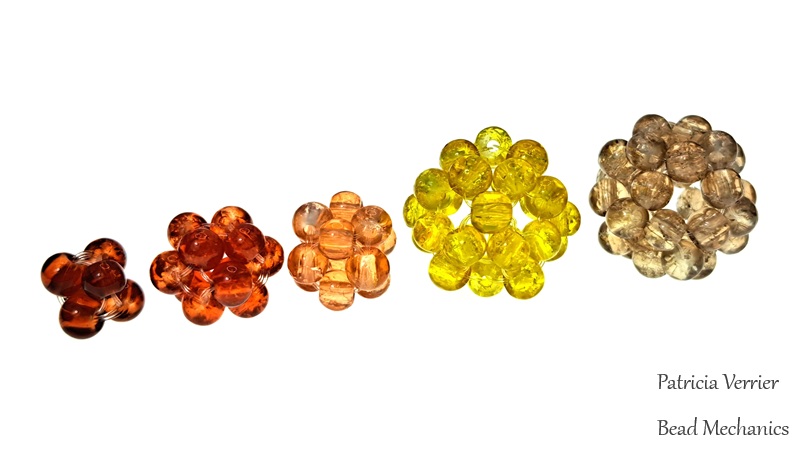
The first and smallest is the tetrahedron. Because of the round beads it doesn’t first look like a tetrahedron – but if you consider that each bead is one edge of the shape you can see the structure underneath. I was a bit concerned that it wouldn’t be possible to weave in the thread on this one, as there isn’t much space, but it actually turned out fine. Even though it’s a simple shape I really like it, and will definitely be using it as a component in other work in the future!
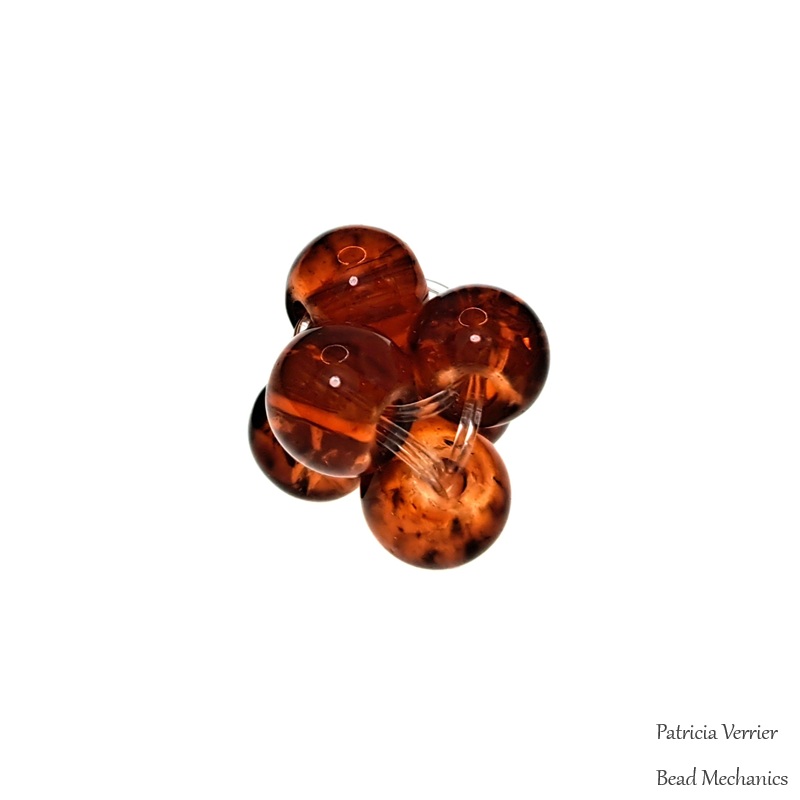
The next two shapes are duals of each other – the octahedron and the cube. If you connect the central point of each face of an octahedron you end up with a cube – a vice versa. The beaded versions of these two shapes therefore look very similar when made with round beads, as you can see in the photo below. The one on the left is an octahedron and the one on the right is a cube – the only difference is the direction the thread goes – otherwise they look almost identical! Made this way the cube is just a standard cubic right angle weave unit, while the octahedron is different thread path – which opens up some interesting design options for combining shapes in larger designs.
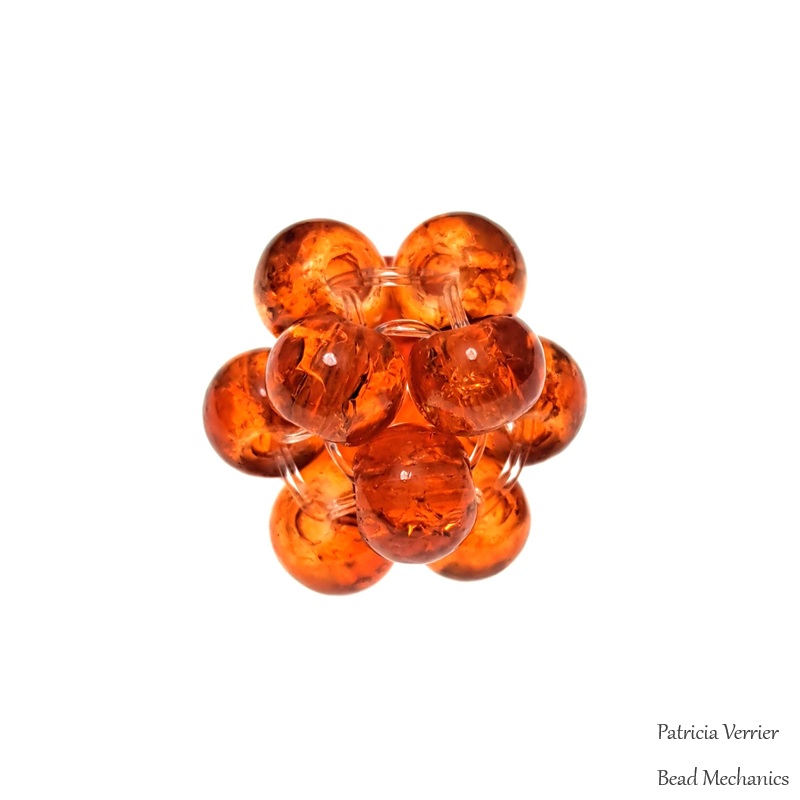
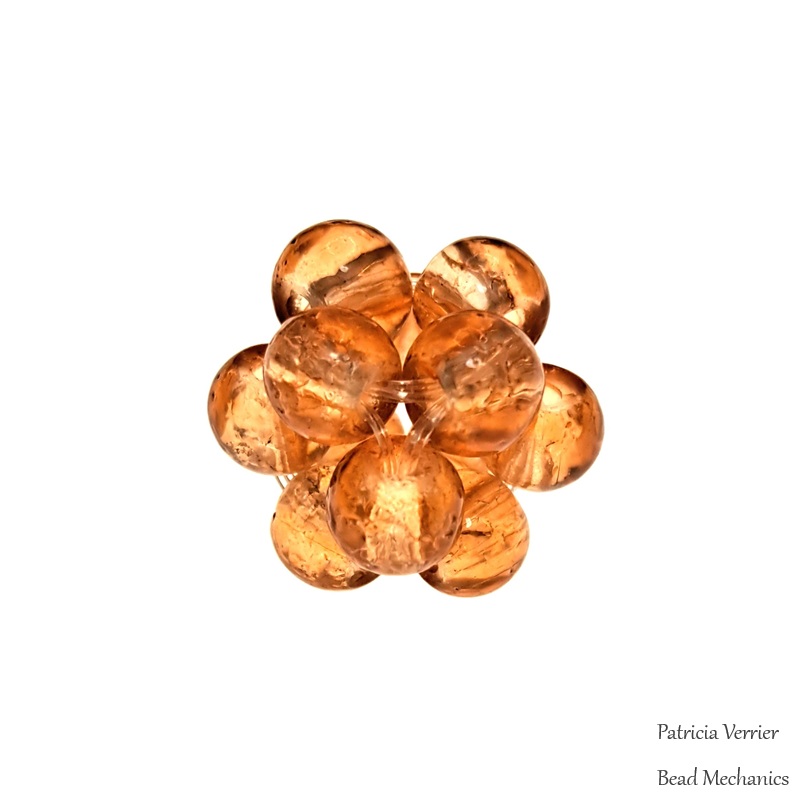
The last two shapes are also duals of each other – the icosahedron (left) and the dodecahedron (right). I’ve made many of these polyhedral RAW dodecahedrons over the years, but I don’t think I’ve ever made an icosahedron. Although they are essentially the same shape overall when made this way, I think the different orientation of the beads in the icosahedron make it a little bit more interesting.
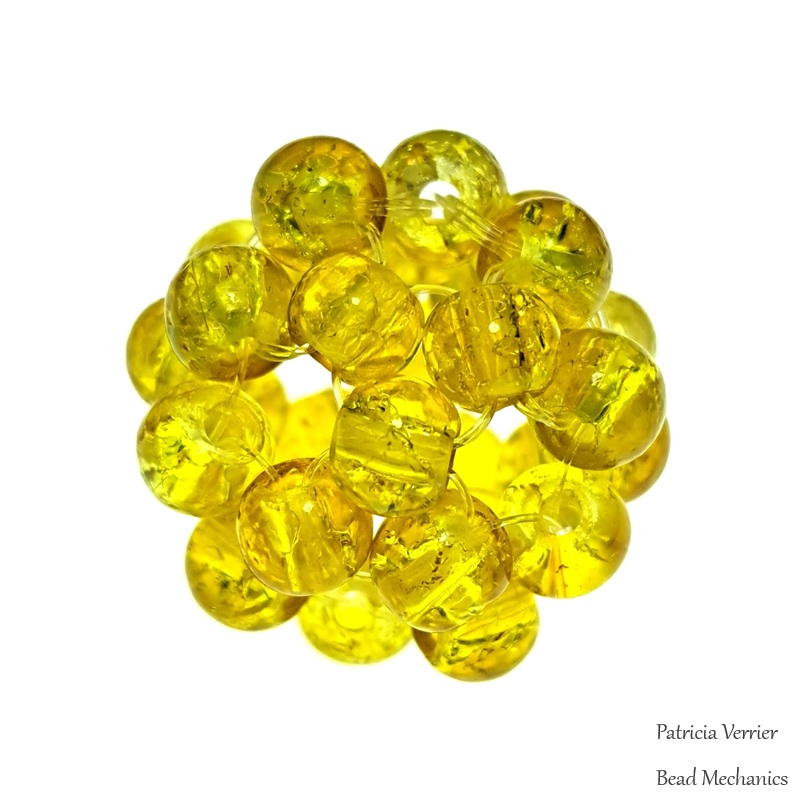
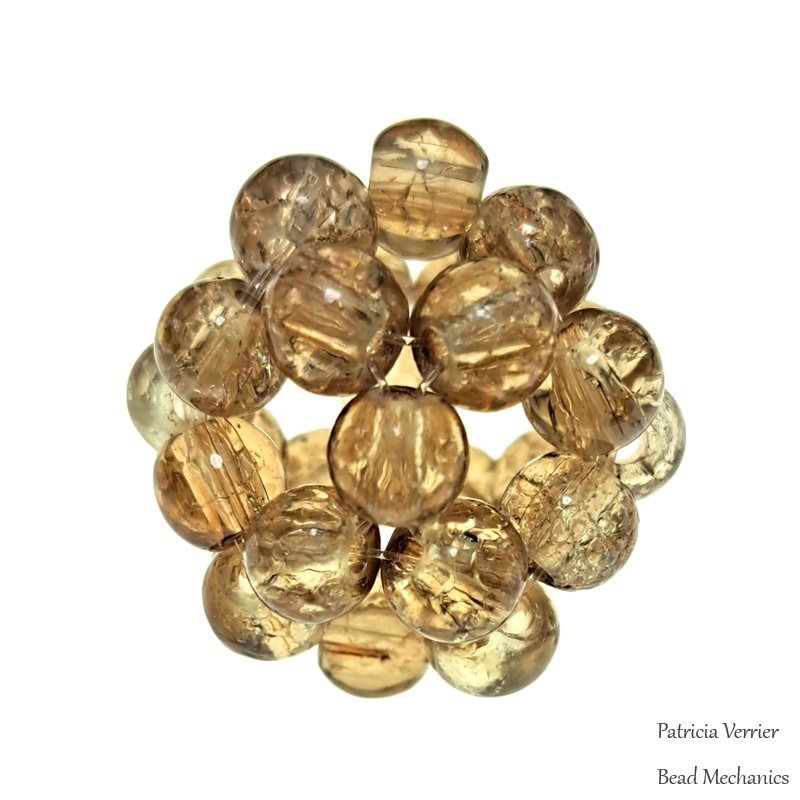
This was a very simple study of the five Platonic solids, but has provided several design ideas. The next task is the Archimedean solids!
 Bead Mechanics
Very interesting! It might be easier to see the structure with bugles. Thanks for sending.
Hope all is well with you! Diane
LikeLike